Soldier Story: Akira Yamauchi
Soldier Story
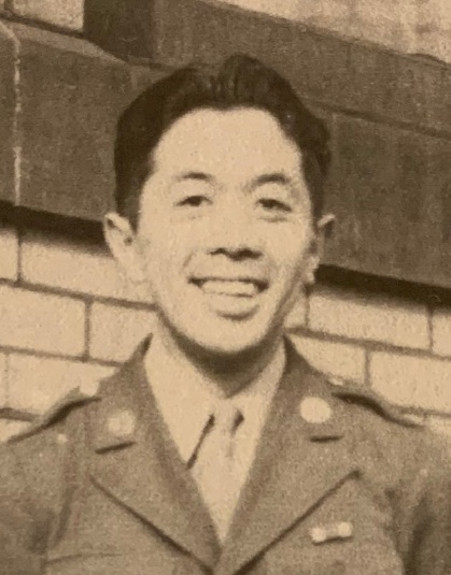
Akira Yamauchi
Staff Sergeant
442nd Regimental Combat Team
2nd Battalion, E Company
Akira Yamauchi was born on April 27, 1919, in Oakland, California. He was the youngest child of Taneyuki and Kino (Tsukada) Yamanouchi, who both emigrated from the village of Hiwaki, Kagoshima Prefecture, Japan. Akira’s brothers were: Hiroshi Mervin, Takashi, and Toru Leland. Note: The family name of Yamanouchi, as used by his father, may also be spelled Yamauchi.
In Japan, Taneyuki (born June 17, 1883) had served as a Sergeant in the cavalry of the Imperial Army. He fought at the Battle of Hill 203 in the Siege of Port Arthur during the Russo-Japanese War in 1904-1905, one of the fiercest battles of the war. For this action, Sgt. Yamanouchi received the Imperial Order Class #6 (known as Kun-Rokuto). He was also expert in kendo, the ancient Japanese art of fencing.
On October 10, 1907, father Taneyuki arrived at El Paso, Texas, after crossing the border from Mexico. By April 1910 he was residing at 33 North Center Street, Stockton, California, with Mr. T. Nakamura.
The following year, 1911, Kino Tsukada (born in 1895) arrived in the US at the age of 16 to marry Taneyuki, a childhood acquaintance. They married on August 24, 1911. In 1913, their eldest sons Hiroshi and Takashi were sent to Japan to live with relatives and be educated.
In 1918, when Taneyuki signed his World War I draft card on September 12, he and Kino were living at 1692 7th Street in Oakland, and he was a self-employed shoemaker.
In 1920, the family was still living at the same address. By 1924 when Hiroshi and Takashi arrived back from Japan, the family had moved to 720 Willow Street in Oakland. Taneyuki had become a prominent member of his community and a lay minister of Oakland’s Japanese Methodist Church. In 1926, Taneyuki died suddenly on September 18 from a cerebral hemorrhage. Kino then supported her family as the proprietor of the Yamanouchi Cleaning and Bath establishment while raising her four sons.
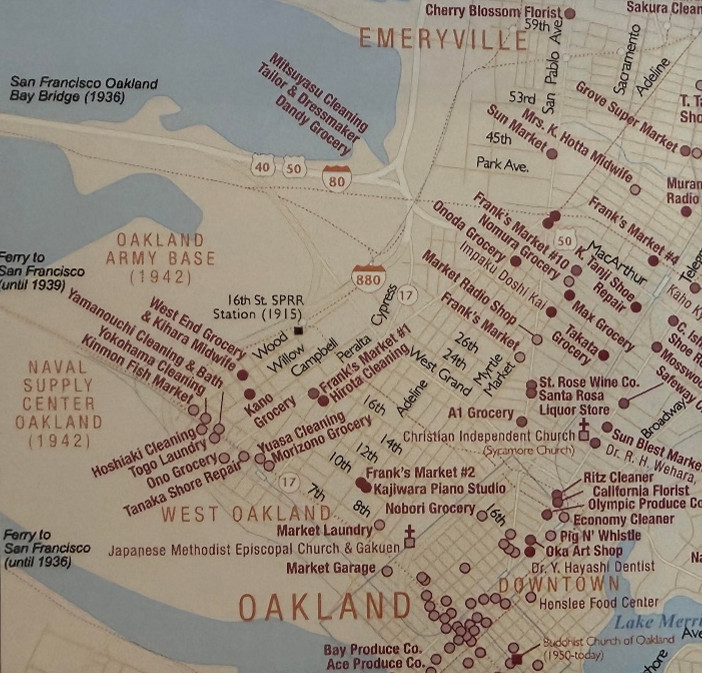
Above: 1940 Oakland map showing Japanese American businesses, including Kino’s
In 1930, the family was still at the Willow Street address. Akira attended Prescott Elementary School and was a member of the Boy Scouts. At University High school he was on the basketball team. After graduating, he worked as a clerk at his brother Hiroshi’s store – Frank’s Market #4.
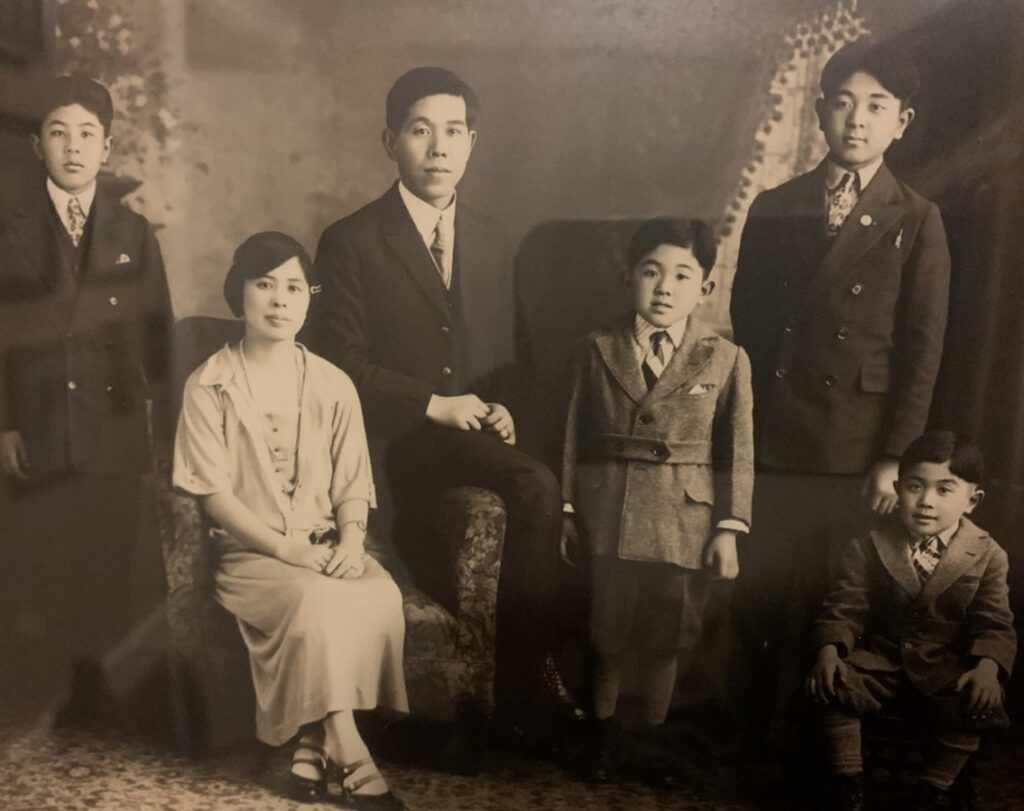
Above: L to R – Takashi, Kino, Taneyuki, Toru, Hiroshi, Akira, c. 1925
Below: Akira’s high school senior photo
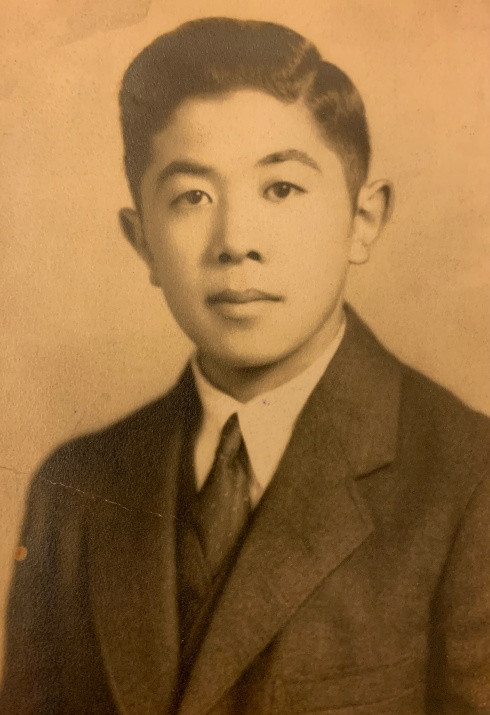
In 1940, Akira was living with his family in the Willow Street home. Mother Kino was the proprietor of her own cleaning service and Akira was a clerk at a grocery store. In June, he went to Osaka to visit relatives and encourage his brother Takashi (who had returned to Japan to study) to return home. Due in part to the discrimination that Japanese Americans were facing in California, Takashi elected to remain in Japan.
Akira arrived back in San Francisco on the Asama Maru on August 3, 1940. Upon arrival, he learned the news that his mother Kino had become acutely ill and died a few days earlier – on July 25 – at the age of 45, leaving the four Yamauchi brothers with no parents.
Akira signed his draft registration card on October 16, 1940, Local Board No. 57, located in the school at 62nd and East 7th Streets in Oakland. His point of contact was his brother Hiroshi. They were living with their family in the Willow Street home. Akira was employed by Kazuo Uyehara at 3139 Foothills Boulevard. He was 5’6” tall and weighed 130 pounds.
Ike, as Akira was known, was drafted into the U.S. Army, and was inducted on January 29, 1942, at the Presidio, Monterey County, California. His occupation was listed as “Sales clerk” and he had completed four years of high school.
Yamauchi was sent for basic training to Camp Robinson, North Little Rock, Arkansas. Afterwards, he was promoted to Corporal on May 1, 1942, and remained there as part of the training cadre, Company B, 61st Training Battalion. He was also a supply Corporal, then promoted to Sergeant in charge of rifles and uniforms.
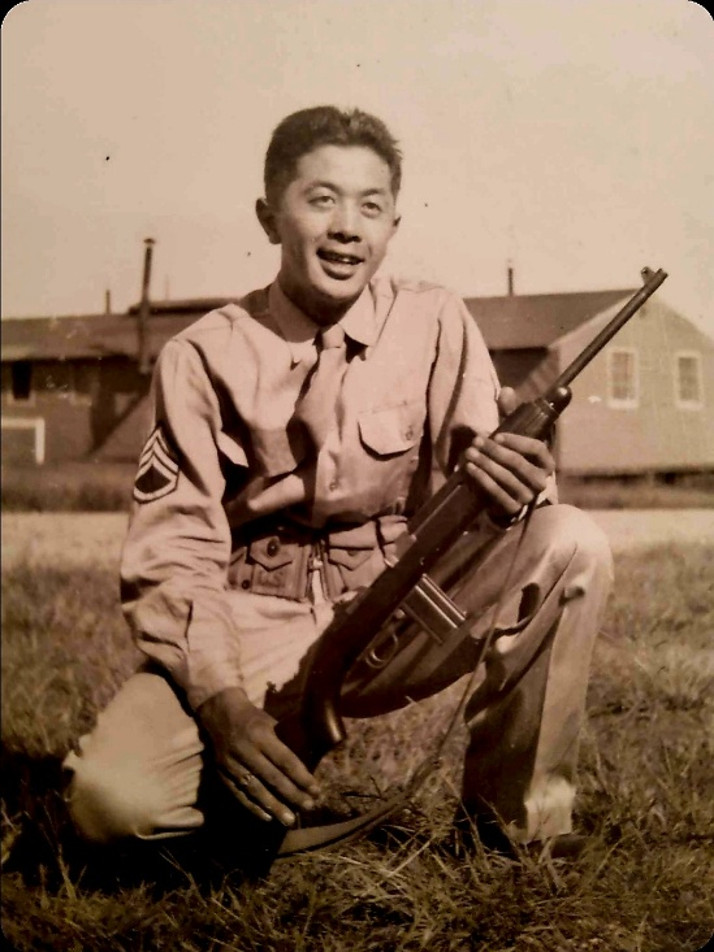
Right: S/Sgt. Ike Yamauchi at Camp Fannin, 1943
In 1943 Yamauchi was transferred to Camp Fannin, Tyler, Texas. He was promoted to Staff Sergeant and was responsible for supplies and munitions.
Meanwhile, Ike’s brothers Hiroshi and Toru had been incarcerated at the Central Utah WRA Internment Camp, also known as Topaz, in September 1942. They resided in Unit 19-4-D.
In April 1943, S/Sgt. Yamauchi was on leave and visited his brothers Hiroshi and Toru at Topaz. A few months later, Toru was released from Topaz on October 12 to work in Cleveland, Ohio. Brother Takashi, who had stayed in Japan in 1940, died there during the war. It was believed that he died of tuberculosis.
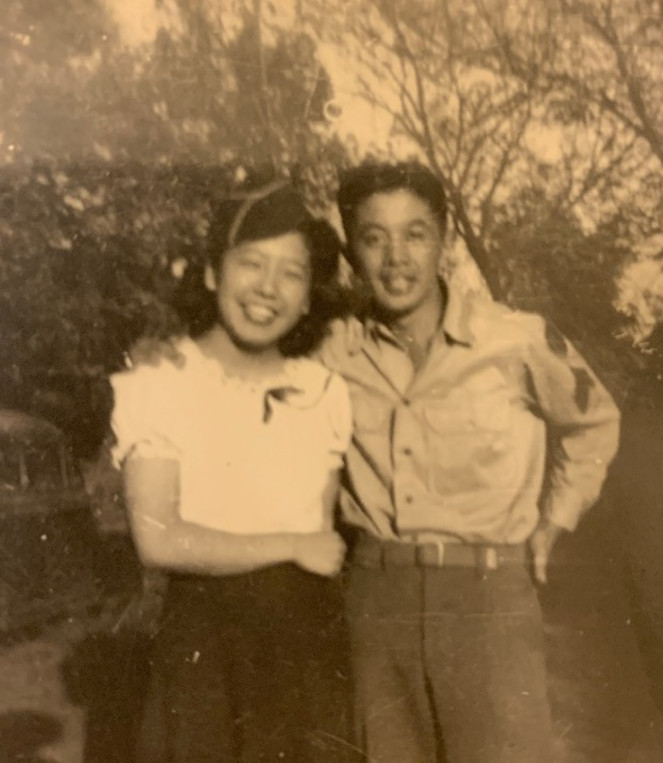
Left: Ike Yamauchi visiting Masako Okane, his future wife, in Cleveland
When Akira was next on leave, he went to Cleveland to visit brother Toru, who was attending night school. He also met Toru’s girlfriend, Mitzi Okane, and her sister Masako Okane.
Mitzi and Masako were two of the four daughters of Shoshichiro and Hisa (Akutsu) Okane from Los Angeles. When they were interned at Gila River WRA Camp in 1942, they lost their home, which they had built, all their possessions, and their businesses. The sewing experience of Mitzi and Masako had enabled them to be released from Gila River to work for a clothing factory in Pella, Iowa. From there, they found employment in Cleveland where they settled and the remainder of the Okane family eventually was able to join them. They established a family home at 1535 East 55th Street. Mitzi and Masako were employed as childcare providers.
In 1944, Sgt. Yamauchi was sent to the 442nd Regimental Combat Team in France as a replacement. On November 3, he sailed with other replacement soldiers aboard the RMS Queen Mary, which had been converted to a troopship to transport soldiers during the war. They reached the Firth of Clyde on the west coast of Scotland, on November 9. The soldiers were then sent by train to Southampton, England. The men next boarded a US ship that took them across the English Channel to Le Havre, France. From there, they were sent by train and trucks to their destinations.
Ike later recalled that on the RMS Queen Mary they slept in “hammocks” and were fed two meals a day. On the train from Scotland, the window shades were closed and they were not allowed to raise them.
Sgt. Yamauchi arrived in southern France where the 442nd was serving in the Rhineland-Maritime Alps Campaign. He was assigned to 2nd Battalion, E Company. The 382 new replacements arrived to the 442nd at the end of the Vosges Campaign of northeast France on November 18, 1944. On the next day, these men and the battle-weary veterans left by truck for the south of France.
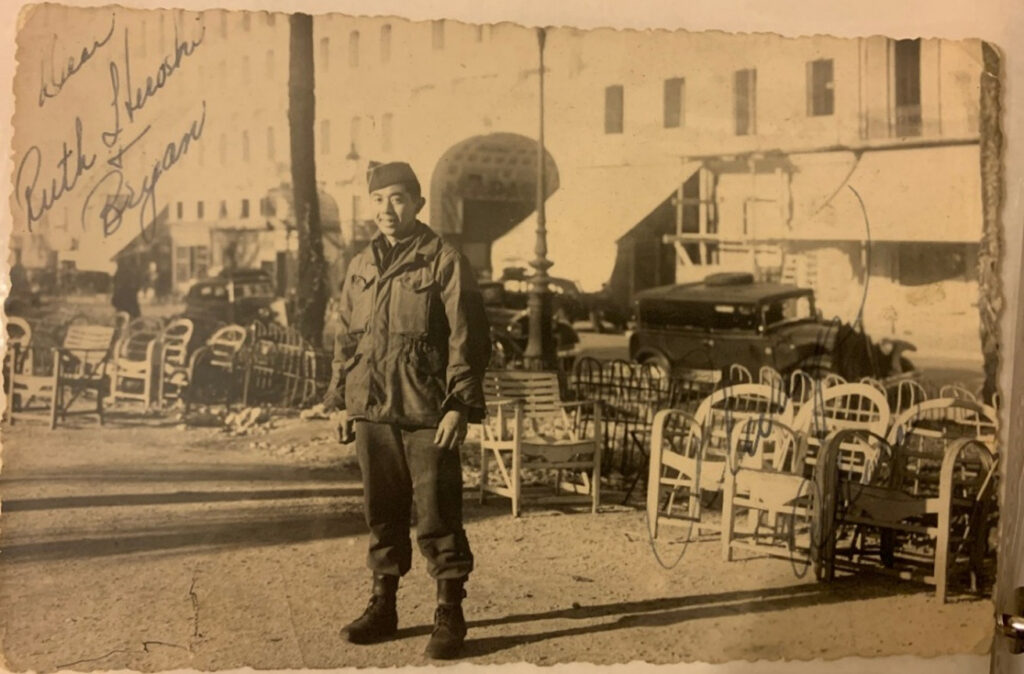
Above: 1944, Ike in Nice
After the fierce fighting and heavy casualties in the Vosges Campaign during October 1944, the 442nd RCT was at half-strength and no longer combat-ready. As a result, they were sent to the south of France where they could rebuild to full combat strength while participating in the Rhineland-Maritime Alps Campaign, which was mostly a defensive position guarding the French-Italian border from attack by the German Army in Italy. The 442nd was there beginning on November 23, 1944.
Initially, Yamauchi’s 2nd Battalion relieved the 68th Armored Infantry Battalion in the defensive lines near Peira Cava, high in the Maritime Alps, on December 1. This put all three of the 442nd’s infantry battalions on line with 2nd Battalion on the north flank and the 100th on the south flank. They were spread over a front of 18 miles. On December 14, 2nd Battalion was relieved by the 65th Infantry and on December 21 they in turn relieved 3rd Battalion in the vicinity of Sospel.
This same pattern was maintained during the rest of the Combat Team’s stay in the Maritime Alps. The 100th remained in the Mediterranean coastal sector and the 2nd and 3rd Battalions either alternated in the Sospel area or held positions on the line at the same time when the Peira Cava area was included in the 442nd’s zone of action.
Throughout their time in southern France, the men were often given day passes to Nice where they could enjoy the nightlife and the Army Rest Centers that had opened up. For this reason, their sojourn there was nicknamed the “Champagne Campaign.”
After several months, the 442nd was combat-ready again and able to return to active combat. They were sent to Italy for fighting in the Po Valley Campaign. On March 15, 1945, they were relieved from their positions and moved in relays to the new staging area at Marseilles. On March 20-22, the 442nd (without its 522nd Field Artillery Battalion who were sent to Germany) left France to join in the final push to defeat the Nazis in Italy. They arrived at the Peninsular Base Section in Pisa on March 25 and were assigned to Fifth Army.
The objective of the 442nd was to execute a surprise diversionary attack on the western anchor of the German Gothic Line. This elaborate system of fortifications had been attacked in the fall of 1944, but no one had yet been able to pry the Germans loose from the western end. The Gothic Line in this area was hewn out of solid rock, reinforced with concrete, and constructed to give all-around protection and observation. The Germans were dug into mountain peaks rising almost sheer from the coastal plain, bare of vegetation save for scanty scrub growth.
The Combat Team left their initial staging area and moved to a bivouac at San Martino, near the walled city of Lucca. Starting on April 3, the 442nd conducted a surprise attack on the Germans at Mount Folgorito. By April 6 the 2nd Battalion, with S/Sgt. Yamauchi, had gained the ridge of Mount Folgorito and was poised for an attack on Mount Carchio and Mount Belvedere to the north, the peak that looked down on the city of Massa. By noon, F Company had reduced Mount Carchio while the rest of the 2nd Battalion began working on the wide, rolling top of Mount Belvedere, which was defended by the veteran troops of the enemy’s crack Machine Gun Battalion Kesselring. The Nazis battered the 442nd attackers with a steady stream of mortar fire, to no avail, and were defeated.
On April 10 the 442nd crossed the Frigido River and drove 3,000 yards ahead to occupy the high ground above the marble-mining center of Carrara. Yamauchi’s E Company seized the 3,000-foot-high Mt. Brugiana that dominated the city itself. On April 12, 2nd Battalion had moved up and was preparing to attack Mt. Pizzacuto, five miles north of Carrara. The attack began at 7:30 a.m. the next day, but met heavy resistance from the Germans. Despite this, Mt. Pizzacuto was captured on April 14.
After these battles, the 442nd moved farther north toward Mt. Nebbione, the last dominant terrain before the vital road center of Aulla. Elements of 2nd Battalion encircled it from the south, but the 442nd’s attacks on the mountain were beaten back. Had they been fresh troops, this likely would not have been the case. However, the men had been climbing up and down 3,000-foot-high peaks for two weeks without much rest and they were exhausted.
On April 20, the 442nd’s three battalions regrouped in the vicinity of Marciaso and prepared to attack north to cut Highways 63 and 6320 leading into Aulla. Company E made a considerable dent in the enemy defenses on April 21 when the ridge of Colle Musatello fell. It had been defended by the 3rd Battalion of the German’s crack 361st Panzer Grenadier Regiment. Company E’s attack later became well known as the place where Lt. Daniel K. Inouye (later a U.S. Senator) was wounded and for which he received the Medal of Honor. The Germans were beaten off on April 21 with terrible losses on their side.
On April 23, 2nd Battalion attacked San Terenzo. Company E made a direct assault in addition to flanking the town from the east. When it was all over, 40 of the enemy were dead and 135 were prisoners.
On April 27, the city of Genoa was liberated when the German general in command surrendered his garrison. The next day, the 442nd’s 3rd Battalion arrived to garrison the town. Second Battalion arrived on April 29 on trucks, which they had gone to great measures to obtain.
The 442nd’s diversionary attack had been relentlessly pursued by the Combat Team, resulting in a complete breakthrough of the Gothic Line in the west. Despite orders from Hitler to fight on, the German forces in Italy surrendered on May 2, 1945, a week before the rest of the German forces in Europe surrendered.
S/Sgt. Yamauchi was with the 442nd while in occupation. Their first move was to regroup the Combat Team at Novi Ligure where they were in bivouac until May 16. On that date, they were sent to Ghedi Airfield near the town of Brescia to search, process, and guard the thousands of German prisoners of war. For those not on duty, a schedule of garrison training was begun. One-day passes to Milan and rest-center passes to Alassio, Venice, and the 442nd’s rest center at San Pellegrino were instituted.
The 442nd was relieved of that duty on June 14 and moved 61 miles away to Lecco where they enjoyed nearby Lake Garlate and the beautiful countryside. On July 7-10 they moved again, to the Livorno/Pisa/Florence area where they took over the duties of the Prisoner of War Sub-Command. The men were scattered throughout the area guarding military installations and German prisoner of war “cages” and supervising work details. The Army also set up educational and recreational programs in which the soldiers fully participated.
In August, 2nd Battalion was moved to Naples to perform the mission of guarding military installations there.
During the occupation, soldiers were returned to the US according to a “point system.” Points were accrued according to such criteria as length of time in theater, wounds received, dependents back home, etc. As Yamauchi did not have as much time in theater as many others, and he had not been wounded nor did he have a wife and children back in the States, he did not have many points. Thus, he remained in Italy until December.
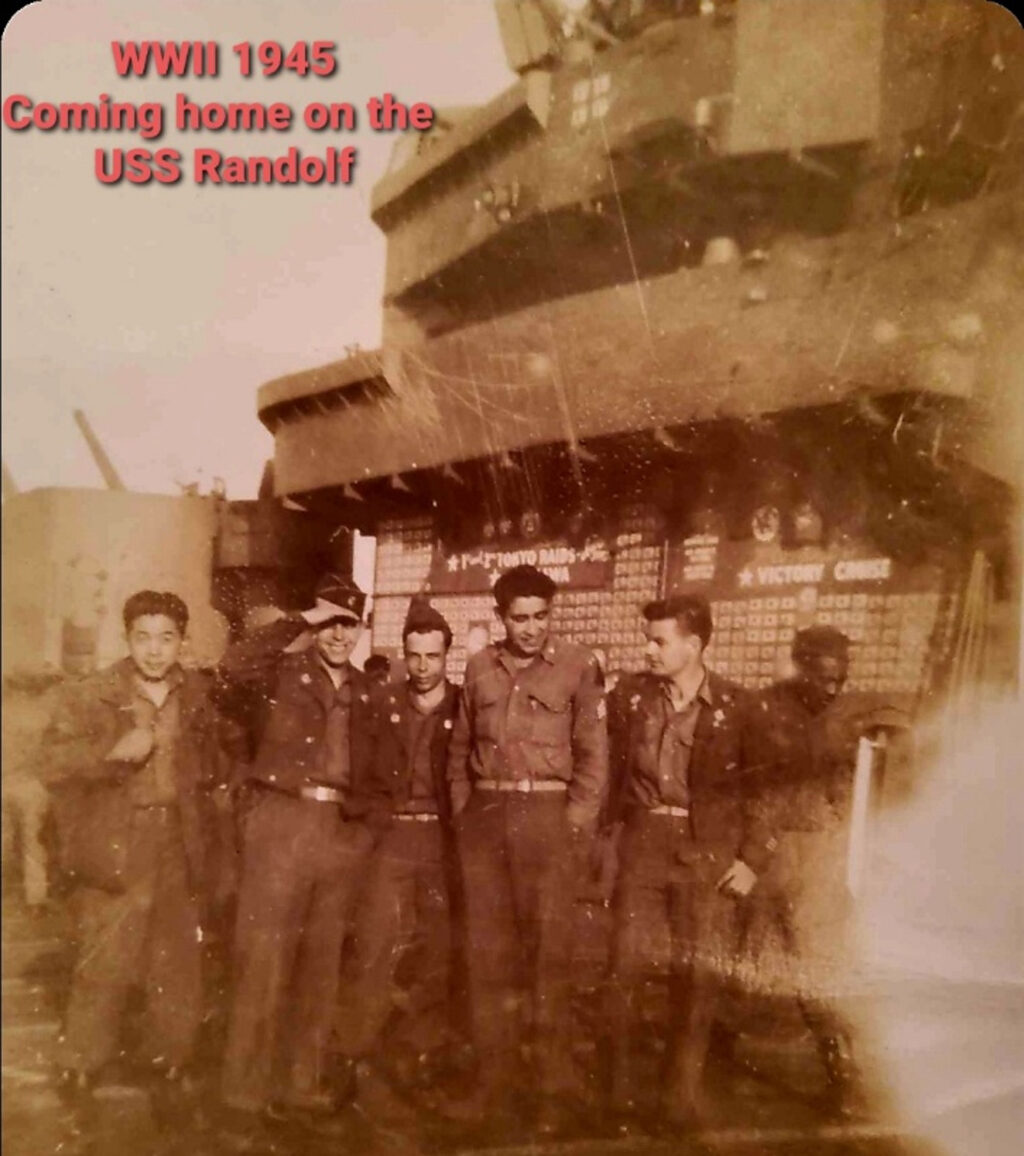
S/Sgt. Akira Yamauchi left Naples on December 15, 1945, aboard the aircraft carrier U.S.S Randolph, which had seen action in the war in the Pacific. On December 25, 1946, the ship, which had just been refitted to carry troops returning from the Mediterranean, arrived at New York Harbor after a tumultuous voyage across the Atlantic through the worst storm in decades. Yamauchi was among the 6,000-plus returning veterans aboard the ship.
Below: S/Sgt. Yamauchi (far left) and other returning men on the U.S.S, Randolph
Yamauchi was discharged from the U.S. Army on December 29, 1945, at Unit B, Separation Center No. 45, Indiantown Gap Military Reservation, Pennsylvania.
For his World War II service, Staff Sergeant Akira Yamauchi earned the following awards: Bronze Star Medal, Good Conduct Medal, American Campaign Medal, European-African-Middle Eastern Campaign Medal with two bronze stars, World War II Victory Medal, Army of Occupation Medal, Distinguished Unit Badge, and Combat Infantryman Badge. He was posthumously awarded the Congressional Gold Medal on October 5, 2010, along with the other veterans of the 442nd Regimental Combat Team. This is the highest Congressional Civilian Medal. The award states: “The United States remains forever indebted to the bravery, valor, and dedication to country these men faced while fighting a 2-fronted battle of discrimination at home and fascism abroad. Their commitment and sacrifice demonstrates a highly uncommon and commendable sense of patriotism and honor.”
Akira’s oldest brother, Takashi, who had returned to Japan, died there during the war – it was believed from tuberculosis.
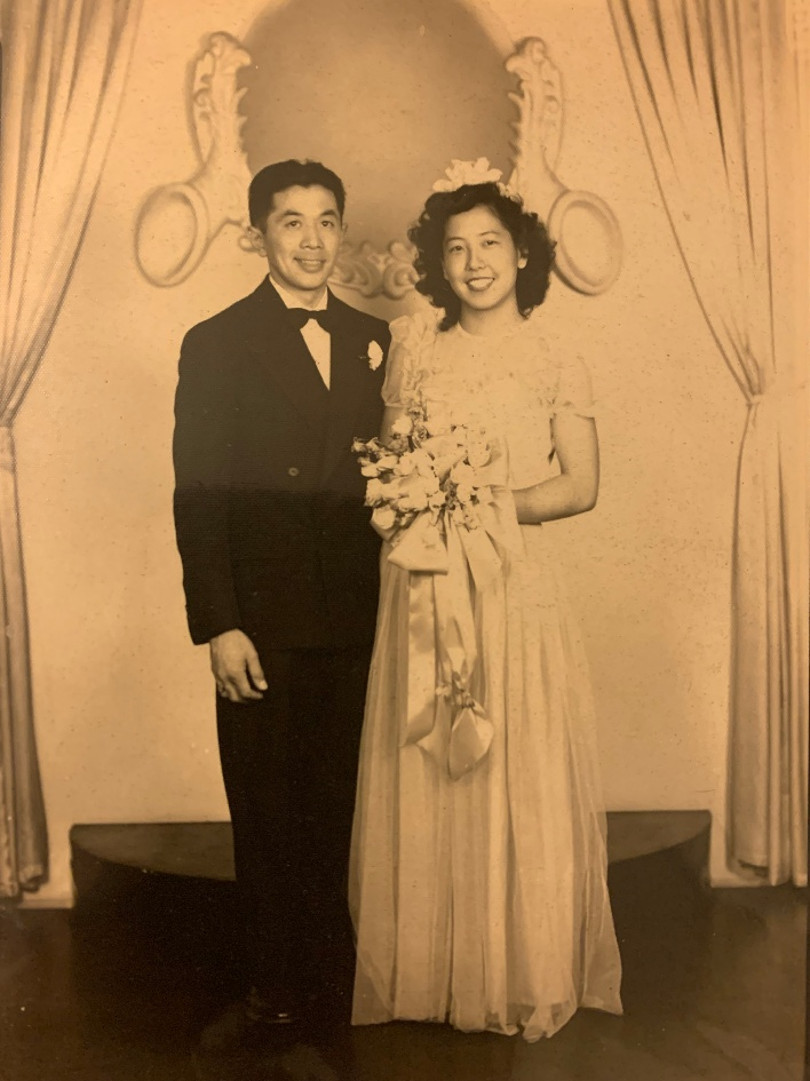
Above: Wedding of Ike and Masie, 1946
After his Army discharge, Yamauchi went to Cleveland where his brother Leland Toru had married Mitzi Okane. He reunited with Masako Okane, known as Masie, who had become his fiancée. They were married on June 8, 1946, at Wilson Methodist Church on East 55th Street and Luther Avenue. Masie was born on February 2, 1924, At the time of their wedding, they were each living in Cleveland – Ike at 1879 East 66th Street and Masie with the rest of the Okane family at 1535 East 55th Street. Ike began working for the F.C. Russell Co.
In 1950, the family was living at 1698 East 86th Street in Cleveland and Ike was an assistant foreman at a storm window manufacturing business. Over the years Ike and Masie raised a family of three sons and two daughters. He later worked for the Ford Motor Company in the Automotive Quality Control Division, from which he later retired.
Below: Ike and Masie in later years
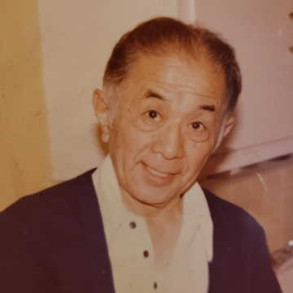
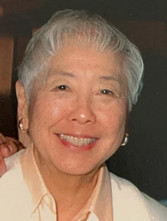
Following are memories written by one of their daughters about her father:
My dad was an avid fisherman of oceans, lakes, and streams. My parents traveled extensively and were anxious to add to their list of new adventures, tasting new cuisines and experiencing different cultures. They golfed, fished, cross-country skied, and ballroom danced together. They were generously and actively involved with the community in which they lived. They laughed hard, played hard, but most of all worked hard to provide a wonderful and full life for their family. There are few words that can adequately describe my father. I can only say that he was the finest example of a human being that I have ever known.
Akira Yamauchi died on June 9, 2002, at the age of 87 at his home in Parma Heights, Ohio. His memorial service was held at the Ripepi Funeral Home, 15762 Pearl Road in Parma Heights at 3:00 p.m. on June 10. He was inurned partially at the Ohio Western Reserve National Cemetery in Seville, Wall 19, Row B, Site 5, and also partially in the family bench at the columbaria at Chapel of the Chimes in Oakland, California, near the cemetery where his parents had been laid to rest. His wife Masie Yamauchi died at the age of 100 on November 2, 2024, and was inurned with her husband in both cemeteries. They were survived by four children, eight grandchildren, and four great-grandchildren. On their niche is inscribed “Forever Loved.”
Researched and written by the Sons & Daughters of the 442nd Regimental Combat Team in 2026 with assistance from his daughter Suki Warden and granddaughter Amy Yamauchi.