Soldier Story: Kiyoshi Ronald Morita
Soldier Story
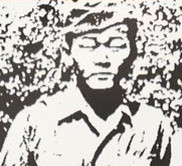
Kiyoshi Morita
Sergeant
442nd Regimental Combat Team
2nd Battalion, Company E
Ronald Kiyoshi Morita was born on November 19, 1921, in Hanamaulu, Kauai, Territory of Hawaii. He was the son of Tosaku and Taka (Inouye) Morita. His siblings were: brothers Isami, Iwao, Masatoshi, Toshiaki, Matao, Tozo, Makoto, and Satoshi; and sisters Midori, Kayoko, and Harumi.
Tosaku and Taka emigrated from Japan in 1902. They arrived from Fukuoka Prefecture on the S.S. Korea on November 12 at the ages of 22 and 19, respectively.
In 1910 through 1940, the family was living in Hanamaulu on the Lihue (Sugar) Plantation. Ronald attended Hanamaulu School. In 1920 their house was on Plantation Road. Father Tosaku initially was a plantation laborer. By 1930, he and son Iwao were mechanics at the sugar mill and son Masatoshi was a blacksmith.
Morita signed his World War II draft registration card on February 14, 1942, at Local Board No. 2 at the Lihue Armory in Lihue, Kauai. His father was his point of contact, and their address was P.O. Box 124, Hanamaulu. He was 5’3” tall and weighed 113 pounds. He was employed as a janitor at the Lihue Theater.
Ronald Kiyoshi Morita enlisted in the U.S. Army on March 23, 1943. At the time he had completed four years of high school and his civilian occupation was listed at “Plumbers, gas fitters, and steam fitters.” He was sent to the “tent city” known as Boomtown at Schofield Barracks on Oahu. On March 28 the new soldiers were given a farewell ceremony by the community at Iolani Palace in Honolulu. They sailed on April 4 aboard the S.S. Lurline to Oakland, California, where they traveled by train across country to Camp Shelby, near Hattiesburg, Mississippi.
After in-processing, Private Morita was assigned to 2nd Battalion, Company E. Basic training was conducted from May 10 to August 23. This was followed by unit training and then platoon and company training. On December 13, the 442nd went on field maneuvers that lasted through the end of 1943. On January 28, 1944, “D” Series maneuvers began in DeSoto National Forest in Mississippi, conducted by the 69th Infantry Division to whom the 442nd was attached for operations. This lasted well into February.
After nearly a year of basic and specialized training and field maneuvers, the 442nd left for Camp Patrick Henry, Virginia, on April 22, 1944. On May 2, the 442nd left from nearby Hampton Roads in a convoy of over 100 ships enroute to the Theater of Operations. On May 28, they arrived at Naples, Italy, where they marched to the train station and were taken to Staging Area No. 4 at nearby Bagnoli.
On June 6, the 442nd left on LSTs for Anzio. However, E Company was left behind in Bagnoli to await the arrival of the rest of 2nd Battalion, which had been diverted to Oran in North Africa to offload cargo. After they arrived in Bagnoli from Oran on June 9 on the HMT Samaria, the 2nd Battalion met up with E Company and went on June 15 directly to the bivouac area 50 miles northwest near Civitavecchia. They arrived on June 17 and met up there with the rest of the 442nd RCT.
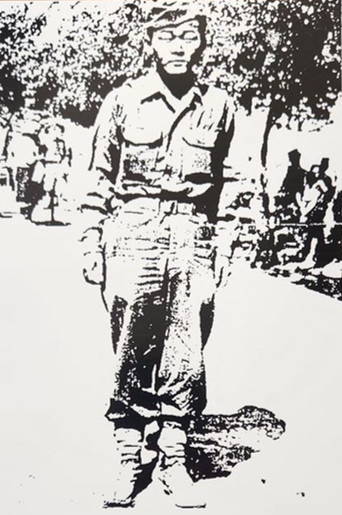
Right: Summer 1944, Kiyoshi in Italy
The next days were spent in an arduous physical conditioning program including long marches over mountainous terrain, and brushing up on marksmanship and small-unit tactics. The 442nd was now part of the 34th Infantry Division.
The 442nd entered combat at Suvereto on June 26 in the Rome-Arno Campaign. After the liberation of Suvereto and Belvedere that day, and Sassetta the next, the Combat Team moved a bit farther north to the Cecina River, which they crossed on July 2. Resistance from the Germans was stiffening, indicating that they would make some sort of a stand on the high ground north of the river.
Their fiercest battle was at Hill 140, just north of the Cecina River. After driving the enemy even farther north to the Arno River, the Combat Team was pulled from the lines and sent to Naples for shipment to France to fight in the Rhineland-Vosges Campaign.
They arrived at Marseilles on September 29 and travelled over 500 miles north by truck or rail boxcars to the Vosges Mountains in northeastern France.
The immediate mission was taking the important rail and road town of Bruyères. This was followed by the liberation of the nearby village of Belmont and the rescue of the “Lost Battalion” – the 1st Battalion of the 133rd (Texas) Infantry Regiment, which had advanced beyond the lines and was surrounded by the enemy.
Morita was present for most if not all of the action during the Vosges Campaign. He was severely wounded in the chest likely at the end of the campaign in early November, although our research did not reveal the exact day. After initial treatment at an aid station and a field hospital, on November 11 he was evacuated 40 miles west to Mirecourt where the Army’s 21st General Hospital was located. The Army had only the previous month set up operations in what was France’s new Ravenel Hospital. Morita remained in Mirecourt for three months.
On February 9, 1945, Sgt. Morita was sufficiently recovered to return to the US. He was sent to the Army’s 3rd General Hospital in Aix-en-Provence, 20 miles north of the port of Marseilles. He was then sent by a U.S. hospital ship to Charleston, South Carolina, and arrived on March 1 at the Army’s Stark General Hospital. Four days later, Morita was flown by military transport to Camp Lockett, near San Diego, California, where he was admitted to the Army’s Mitchell Convalescent Hospital on March 4. After a month at Mitchell, he was given a 30-day furlough on April 7. When that ended, he was granted a 36-day furlough on May 15. Note. Mitchell was the Armed Forces’ first convalescent hospital.
By June 7, Sgt. Morita was back at Mitchell, and was discharged from the U.S. Army on that day.
For his service in World War II, Sgt. Ronald Kiyoshi Morita was awarded the following: Bronze Star Medal, Purple Heart Medal, Good Conduct Medal, American Defense Medal, American Campaign Medal, European-African-Middle Eastern Campaign Medal with two bronze service stars, World War II Victory Medal, Distinguished Unit Badge, and Combat Infantryman Badge. He was posthumously awarded the Congressional Gold Medal on October 5, 2010, along with the other veterans of the 442nd Regimental Combat Team. Conferred by the U.S. Congress, the award states: “The United States remains forever indebted to the bravery, valor, and dedication to country these men faced while fighting a two-fronted battle of discrimination at home and fascism abroad. Their commitment and sacrifice demonstrate a highly uncommon and commendable sense of patriotism and honor.”
At some point during his recovery, Morita had met Josephine Yoshiko Echigo. She was born March 15, 1918, in El Paso, Texas, to Bunkichi and Miyo Echigo, known as Ben and Mary. Her family (including her three brothers) had later moved to Denver, Colorado.
Upon his discharge, he returned home to Kauai. Morita made arrangements for Josephine Echigo, who was by then his fiancée, to travel to Hawaii. Josie, as she was known, arrived on February 21, 1946, on the S.S. Aleutian from San Francisco at 8:00 a.m. at Honolulu Harbor’s Pier 7-E. At the time, Morita was employed by Hawaiian Air Depot. They were married on March 3, 1946, in Lihue.
The couple settled in at 1703-D South Beretania Street, Honolulu, where their eldest daughter was born the following year. In 1949 they moved to Texas, sailing through the Panama Canal on the way. They settled in San Antonio where Ronald enrolled at Trinity University for the fall semester. In January 1952, it was announced in the San Antonio Express-News that he had been admitted to Alpha Chi, the national scholastic honor society. He earned his Bachelor of Arts degree in August 1952; and his Master of Science degree on June 1, 1953, from Trinity University.
Afterwards, the family settled in Denver in 1952. They had two additional daughters. Sadly, their second daughter, Margaret, died in infancy (or was possibly stillborn) on September 22, 1956. She was buried at Denver’s Fairmount Cemetery, Block 65.
Ronald Kiyoshi Morita died on December 7, 1993, in Denver at the age of 72. He was buried at Arlington National Cemetery, Arlington, Virginia, Section 70, Site 537. On his tombstone was inscribed “Sergeant, U.S. Army, World War II, Purple Heart.” His wife Josephine died on November 12, 2011, and was buried at Fairmount Cemetery in Denver, Block 69. They were survived by two daughters and many nieces and nephews.
Kiyoshi’s brother Iwao Morita served in the 100th Infantry Battalion (Separate), Company F. Brother Masatoshi Morita served in the 100th Infantry Battalion (Separate), Company E.
Researched and written by the Sons & Daughters of the 442nd Regimental Combat Team in 2026 with assistance by his niece and her husband, who are members..