Soldier Story: Raymond Tsukasa Yamada
Soldier Story
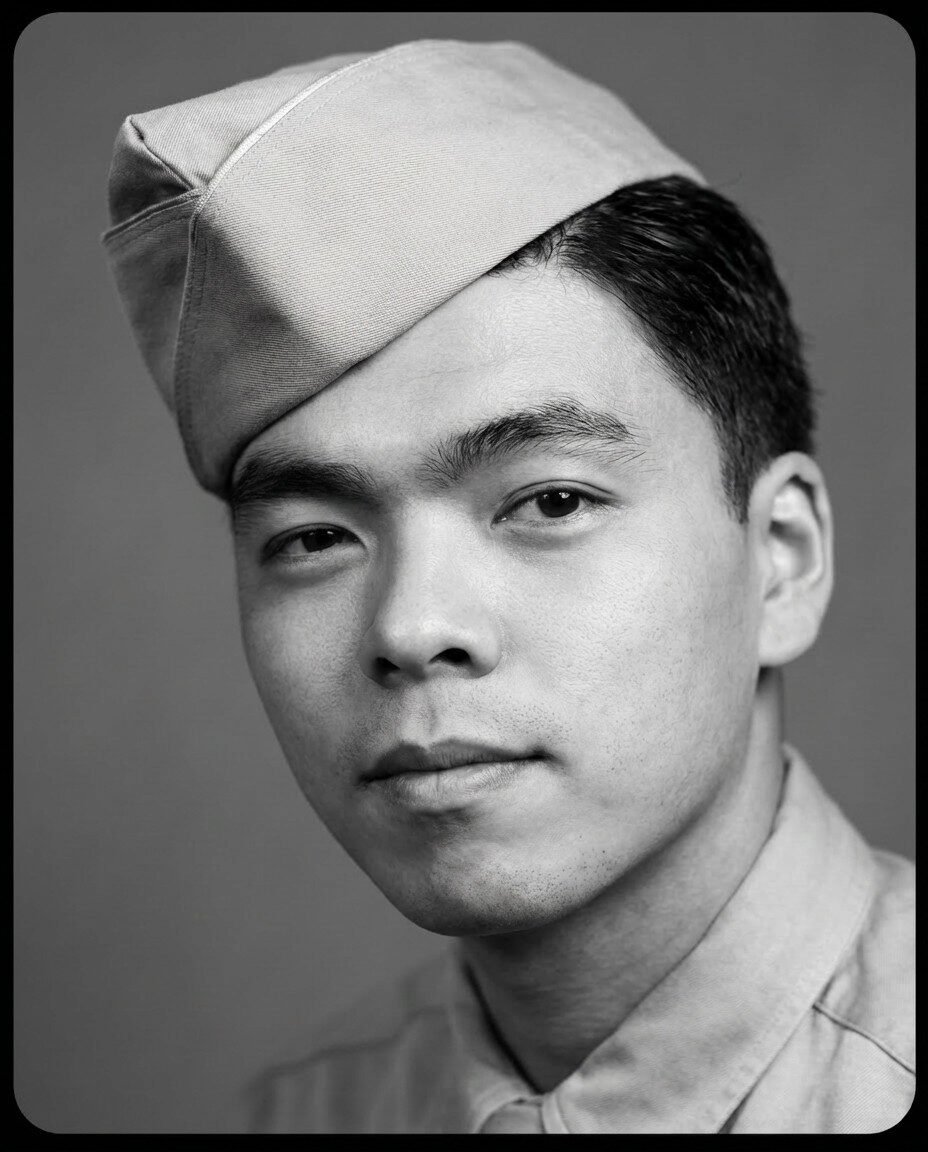
Raymond Tsukasa Yamada
Private First Class
442nd Regimental Combat Team
3rd Battalion, Headquarters Company
Raymond Tsukasa Yamada was born on October 9, 1920, in Honolulu, Oahu, Territory of Hawaii. He was the son of Tokusaburo and Misano (Nomura) Yamada. His siblings were: brothers Masao Allan, and Wataru Samuel; and sisters Clara Fumiye and Bessie Tsutako.
His parents arrived in Hawaii from the village of Niho, Hiroshima Prefecture, Japan, on the Nippon Maru on May 29, 1908. His father was a self-employed house painter.
In 1921 his mother took his brother Masao and him to Japan to visit family, arriving on April 25 on the Korea Maru. Nine months later, on February 6, 1922, they arrived back home on the Taiyo Maru and brother Wataru was with them.
In 1930, the family lived at 1025 Paka Lane and father Tokusaburo was a house painter.
Tsukasa was educated at Lunalilo School and he graduated in 1936 from McKinley High School.
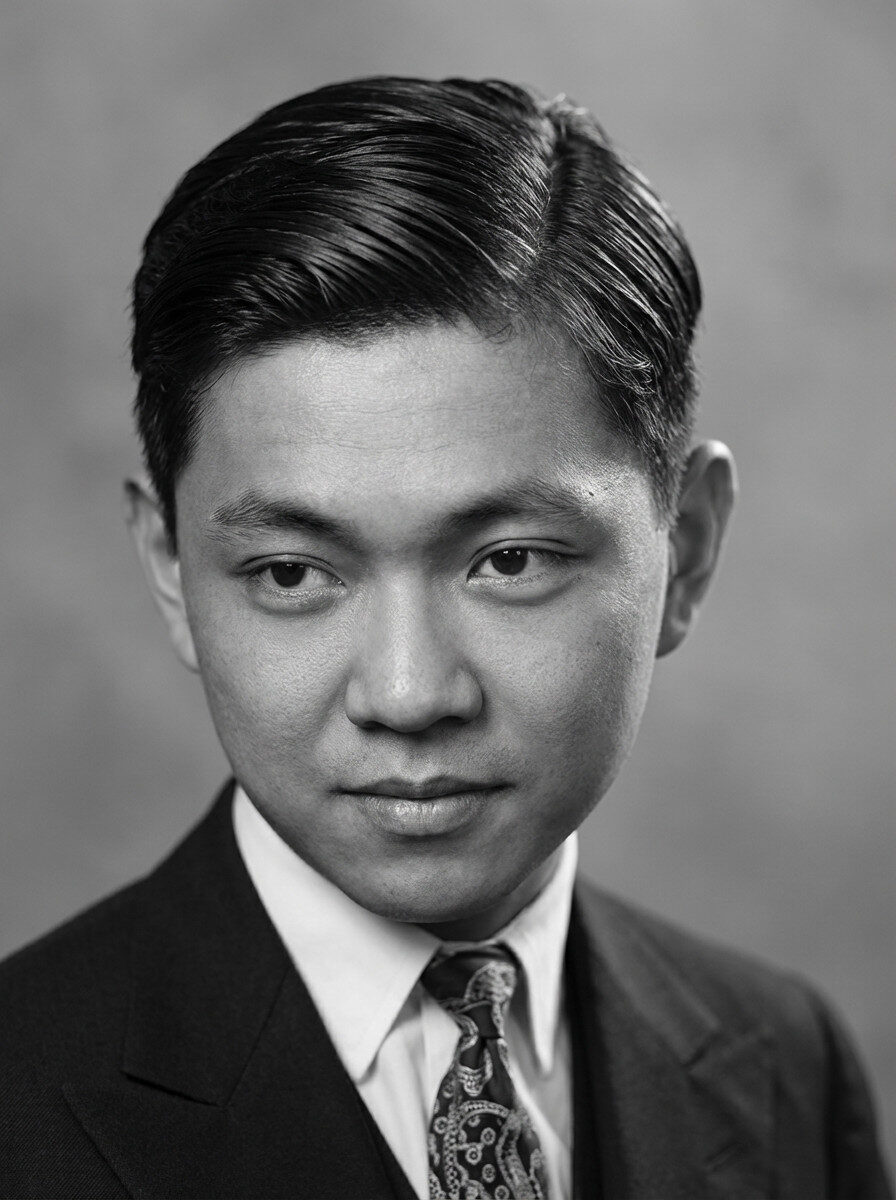
Right: Senior class photo, 1936
In 1940, the family lived at 915 Makahiki Lane. Eldest son Allen was married and he and his wife Lillian lived with the family. Father Tokusaburo was a painting contractor and Allen was a building construction contractor. Wataru and Tsukasa were painters in building construction.
On December 9, 1940, Yamada was among the 600 men who were inducted into the 298th Infantry Regiment, Hawaii National Guard. He underwent three months of preliminary training at Schofield Barracks, where he and the other inductees lived in the “tent city” known as Boom Town. On March 15, 1941, he was assigned to Company B, stationed at the Schofield Reception Center. On April 19, he was assigned to Headquarters Detachment, First Battalion, Company E.
Tsukasa registered for the draft at Local Board No. 3 in Honolulu on February 15, 1942. His address was 748 Wiliwili Street, his brother Sam at the same address was his point of contact, and his employer was Kodak of Hawaii at 1065 Kapiolani Boulevard. He was 5’7” tall and weighed 135 pounds. He spent his free time playing baseball with the Seibu and McCully teams in the position of pitcher.
Private First Class Raymond Tsukasa Yamada was inducted into the U.S. Army on March 24, 1943, Local Board No. 3 in Honolulu. He was sent to the “tent city” known as Boomtown with other inductees at Schofield Barracks. On March 28 they were given a community farewell at Iolani Palace. On April 4 they sailed on the S.S. Lurline to Oakland, California. After a train trip across the U.S. they arrived at Camp Shelby, Mississippi, where Raymond was assigned to 3rd Battalion, Headquarters Company.
He had applied to the Territory of Hawaii for an official name change at some point. This application was approved on August 1, 1944. The change entailed the addition of Raymond as his first name and Tsukasa became his middle name.
After a year of training, Yamada left Camp Shelby with the 442nd on April 22, 1944, for Camp Patrick Henry, Virginia. They sailed in a convoy of over 100 ships on May 2 from nearby Hampton Roads and arrived at Naples, Italy, on May 28.
The Combat Team entered combat on June 26 near Suvereto north of Rome.
Yamada served in all the campaigns of the 442nd: Rome-Arno in Italy; Rhineland-Vosges and Rhineland-Maritime Alps in France; and Po Valley in Italy.
While in the Vosges Campaign, Yamada was cited for action and later received the Bronze Star Medal. The citation, dated February 23, 1945, reads:
For heroic achievement near Bruyères, France, on 22 October 1944, when an urgent call for litter bearers was received by the medical aid station, Private Yamada instantly volunteered to act as one of the litter bearers. In order to reach the wounded men it was necessary to walk [missing text]… Disregarding additional fire from enemy snipers he and his men quickly located the injured men in the semi-darkness, placed them on the litters and evacuated them to the aid station. Entered the service from Honolulu, Oahu, Territory of Hawaii.
His Bronze Star Medal was presented to him in Italy by Lieutenant General Jacob L. Devers, Commander of the 6th Army Group, as reported in the April 16 Honolulu Star-Bulletin.
The Germans in Italy surrendered on May 2, 1945, a week before the German Army in the rest of Europe. The 442nd was sent to a bivouac area at Novi Ligure, then on May 16 to Ghedi Air Field just outside the town of Brescia to process German prisoners of war.
About a week after the 442nd set up camp at Ghedi Air Field, Pfc. Raymond Yamada was on a mission near the town of Mirandola, 88 miles southeast of Brescia. He was in an accident or some unnamed mishap and he died there on May 23, 1945. The Honolulu newspaper reported that he was “killed in action.” Yamada’s reason for being there, the others who were with him, his cause of death, and his burial location were not revealed in our research. The nearest U.S. Military Cemetery was located in Florence.
For his military service Private First Class Raymond Tsukasa Yamada was awarded the Bronze Star Medal with one oak leaf cluster, Purple Heart Medal with one oak leaf cluster, Good Conduct Medal, American Campaign Medal, European-African-Middle Eastern Campaign Medal with four bronze service stars, World War II Victory Medal, Distinguished Unit Badge and Combat Infantryman Badge. He was posthumously awarded the Congressional Gold Medal on October 5, 2010, along with the other veterans of the 442nd Regimental Combat Team. Conferred by the U.S. Congress, the award states: “The United States remains forever indebted to the bravery, valor, and dedication to country these men faced while fighting a two-fronted battle of discrimination at home and fascism abroad. Their commitment and sacrifice demonstrate a highly uncommon and commendable sense of patriotism and honor.”
After Raymond’s family was notified of his death, they held a memorial service for him on June 10, 1945, at Nishi Hongwangi Temple at 1727 Fort Street.
On December 9, 1945, a Memorial Service for 266 veterans of the 100th and 442nd was held at McKinley High School auditorium. The service was sponsored by the 100th Battalion and the 442nd veterans, the Women’s War Service Committee, and the Emergency Service Committee. Lt. General Robert C. Richardson gave the main address.
In 1947, the US began to close most of the overseas military cemeteries. Families were given the option of having their loved one reburied in one of the few that would remain, or being returned home. The Yamada family chose to have their son returned to Hawaii.
On December 24, 1948, Yamada returned home, one of 122 of Hawaii’s war dead whose remains were on the USAT Sinnet, which arrived at Pearl Harbor’s Pier M-3 at 8:30 a.m. Hundreds of family, friends, and members of the public were there to greet the ship. The 264th Army Band played Aloha Oe as the ship docked. There was a shipside service and Oren E. Long, the Secretary of Hawaii, spoke, “These men stood the test of action and added a new chapter of American heroism to our history.”
On July 27, 1949, Pfc. Raymond T. Yamada was interred at the National Memorial Cemetery of the Pacific (Punchbowl), Honolulu, Section D, Site 91.
Researched and written by the Sons & Daughters of the 442nd Regimental Combat Team in 2021; updated in 2025.