Soldier Story: Toshio Higa
Soldier Story
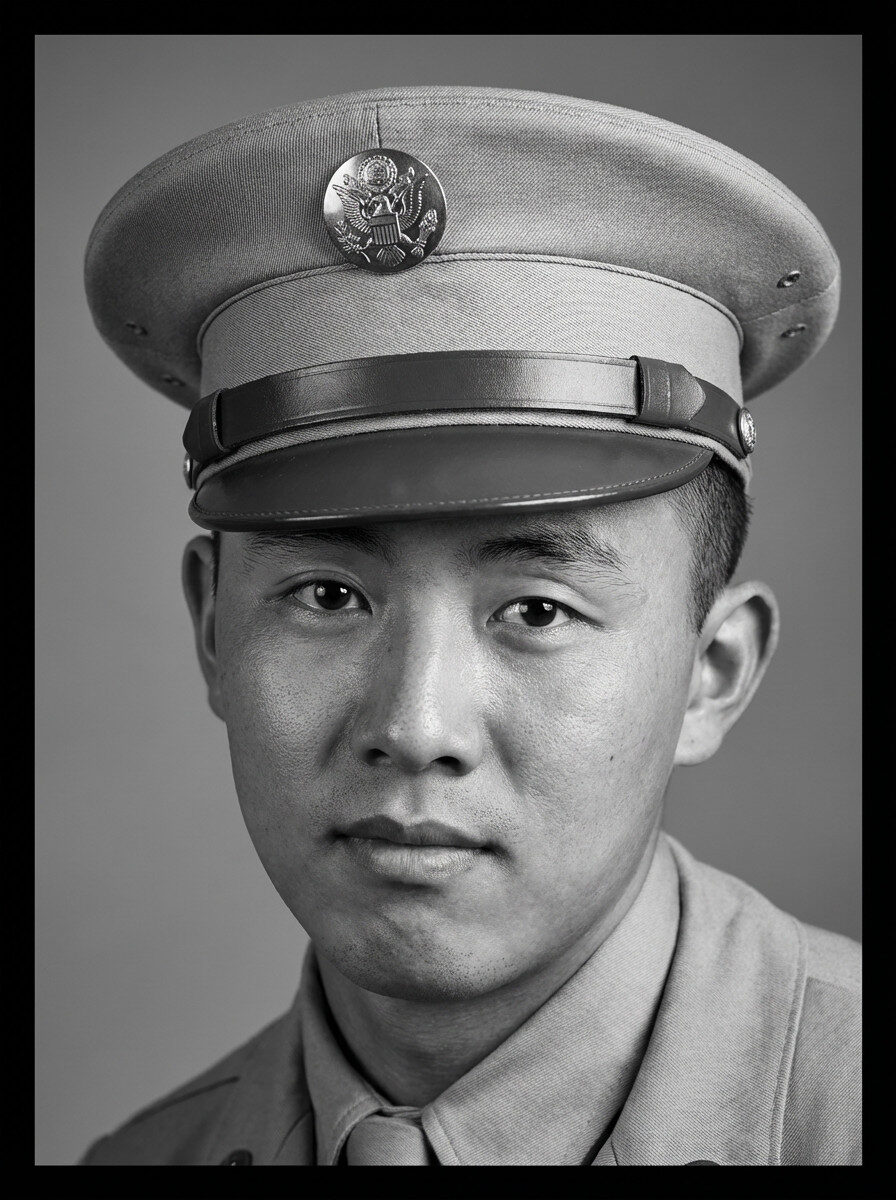
Toshio Higa
Corporal
442nd Regimental Combat Team
3rd Battalion, Headquarters Company
Toshio Higa was born in Honolulu, Territory of Hawaii, on September 17, 1921. He was the son of Shintei and Tsuru (Miyasato) Higa. He had two siblings from his father’s second marriage: David Kiyoshi and Caroline Emiko Higa.
His parents arrived from Yafusa, Okinawa Prefecture, Japan, in 1915 and 1917, respectively. His father worked at the Hawaiian Pineapple Co. in Iwilei, Honolulu, but later became a self-employed building contractor.
In 1920, Shintei and Tsuru lived on Webb Lane and he was a construction worker.
In 1930, Toshio was living in south Hilo, Hawaii island, with his father’s brother Jiro Miyashiro, his wife Kamato Miyashiro, their two sons and four daughters. Jiro was a laborer on the sugar plantation.
Toshio’s mother died when he was 11 years old. Five years later his father married Kimiko Okawa.
Toshio was educated at Waikiki School, Kuhio School, Washington Intermediate School, and McKinley High School.
In 1940, Toshio was living at 3073 Noela Drive, the home of Randolph Crossley, President of the Hawaiian Pineapple Company (cannery). He was their gardener.
Higa registered for the draft on June 20, 1942, at Local Board No. 3, at the National Guard Armory, Honolulu. His father, whose address was 2675 Kapiolani Boulevard, was listed as next of kin. He was 5’4” tall and weighed 135 pounds. He was employed by Castle & Cooke Terminals and his address was 2455 South King Street
Higa volunteered and was enlisted into the U.S. Army at Schofield Barracks, Oahu, on March 24, 1943. He was sent with the other new soldiers to the “tent city,” known as Boom Town, at Schofield Barracks. On March 28, he was among the men given a community farewell ceremony at Iolani Palace. He left with the other new volunteers for Oakland, California, on the S.S. Lurline on April 4.
After a train trip across country to Camp Shelby, Mississippi, Higa was assigned to 3rd Battalion, Headquarters Company and began basic training on May 10. On August 23, basic training was concluded and the men were given furloughs for visits to such cities as New York, Baltimore, Washington D.C.
On October 20, unit trainingbegan for platoons and companies and lasted about one month. During this time, Higa was among many 442nd soldiers who received a promotion in rank – he was promoted to Corporal, as reported in the Hilo Herald newspaper on November 20.
In November 1943, Corporal Toshio Higa was admitted to the U.S. Army Hospital at Camp Shelby with respiratory symptoms that developed into meningitis. The diagnosis was meningitis cerebrospinal and meningococcal. He died on November 15 and was buried at Mobile National Cemetery, Mobile, Alabama.
For his military service, Corporal Toshio Higa was awarded the World War II Victory Medal. He was posthumously awarded the Congressional Gold Medal on October 5, 2010, along with the other veterans of the 442nd Regimental Combat Team. Conferred by the U.S. Congress, the award states: “The United States remains forever indebted to the bravery, valor, and dedication to country these men faced while fighting a two-fronted battle of discrimination at home and fascism abroad. Their commitment and sacrifice demonstrate a highly uncommon and commendable sense of patriotism and honor.”
In 1948, the US began the program of closing many overseas military cemeteries and giving the families the option of having their loved one returned home. As part of this program, the Higa family was offered the option of having Toshio remain in Alabama or returned to Honolulu. They chose the latter.
As a result, in 1949 the remains of Corporal Higa were returned to Honolulu. On July 28 he was one of 20 war dead to be buried at the National Memorial Cemetery of the Pacific at Punchbowl. His burial was at 9:30 a.m. in Section D, Site 255.
Researched and written by the Sons & Daughters of the 442nd Regimental Combat Team in 2021 and updated in 2025.